
Asset Planning & Tax Structures
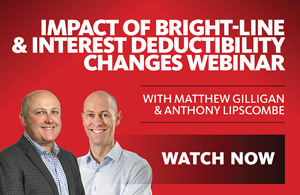
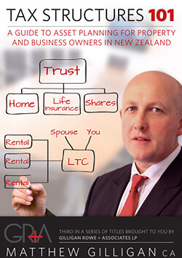
Run by Tax and Asset Planning Partner Anthony Lipscombe, GRA asset planning focuses on ensuring your taxation and asset protection structures are optimised.
What does this mean, and what is asset planning? Asset planning is the process of designing taxation and legal structures, ensuring taxation, estate planning and asset protection are all dealt with at the same time.
In short, creating a good structure to own your home, business assets and investments requires thorough planning.
This involves taxation and legal analysis. The end result is a 'holistic' outcome that means you will be in the best position to increase your net worth while having the right protection in place.
Introduction to Asset Planning (Excerpt from Trusts & Tax Webinar, October 2022).
A Holistic Approach - The GRA Difference
Don't fall into the trap of allowing a practitioner from just one discipline (accounting or legal), or a person who is non-expert in this area, to set up your structures.
Take the typical lawyer. They will seek to maximise asset protection and design your estate plan - good motives are integral to the process. But lawyers tend to put all of your assets inside a trust, without thought as to the tax ramifications of
moving assets.
Asset Planning & Tax Issues
Examples of tax issues you may face are:
- Locking up losses on rental properties - Properties in trusts or in companies outside of 'group' structures result in losses not being accessible to income earned, impacting cash flow and tax efficiency.
- Loss of tax credits - If you move more than 34% of the shares of a company that carries tax credits, New Zealand tax rules say the breach in continuity of shareholding results in forfeiture of all taxes paid by the company. A disaster, as you end up paying tax.
- Forfeiture of losses to carry forward in companies - For those with losses in companies to carry forward, transferring more than 51% of the shares results in forfeiture of those losses. This continuity test aggregates all shareholding shifts throughout the years and matches them to losses earned 'period by period', so if you moved 51% three years ago and lost $100k that year - no problem. If three years later you still carry these losses, and move 1%, the losses are forfeit.
- For farmers - Moving stock causes you to crystallise stock values with resulting losses or taxable surpluses, as you dispose of the asset out of your valuation scheme.
- For rental investments shifted - You create depreciation recovered, resulting in tax to pay on the depreciation claimed.
- Selling business assets from companies to other companies or trusts, resulting in a capital gain, will cause such gain to be taxable to the company selling it (on realisation of the gain), unless some tax planning is done in advance. For example, you have a business in a company that is sold at valuation to a new company owned by a trust for $1m. Because the gain is a related party gain, the gain is taxable on windup of the vendor company. This could easily be avoided with a bit of planning in advance.
- For property traders - Incorrect handling of GST and zero rating when buying property can cost you dearly if you get it wrong, or if the vendor's GST status is not identified correctly.
This list, which is a small list of tax travesties we see lawyers (and some accountants) committing, identifies common traps for people not familiar with tax issues in asset planning. The result is that you pay the cost, and fall out with your adviser because you realise they have let you down by not providing information.
Some Accountants Can Get It Wrong
As well as this, accountants setting up asset planning structures often make problems for their clients. How? By not addressing the legal points of interest in relation to a structure.
Common things that we see accountants doing that should be addressed are:
- Failure to consider the nature of assets from a relationship property perspective - is it joint property or separate relationship property? Take an inheritance, for example. If kept in a separate trust, it is not joint property. We frequently see accountants not versed in the legal side of asset planning trampling these sorts of issues, resulting in one spouse losing 50% of their separate relationship property to the other.
- Failure to look at general security agreements securing your own money in your own company, a huge advantage for self-employed. This is something that should be addressed in all self-employed structures, but so often ignored by accountants.
- Failure to draft new Wills and set up the estate plan as part of an asset planning process. (When you create trusts, you need to do new Wills, which typically an accountant will not have the expertise to do.)
- Failure to address blended family issues - children to prior spouses. Consider what happens if one spouse dies, leaving the surviving spouse in charge of the assets for the children of the deceased spouse's previous relationship. Will the deceased
spouse's children be treated equally and properly?
These sorts of things are often ignored by advisers not versed in asset planning.
Let GRA Help
 If you want to achieve your money goals, then asset planning will be
a critical part of that success. It is a specialist process, best run by a combination of legal advisers and taxation advisers.
If you want to achieve your money goals, then asset planning will be
a critical part of that success. It is a specialist process, best run by a combination of legal advisers and taxation advisers.
Get your lawyer and accountant working together, thinking through not only these issues, but also looking further ahead to where you are going with your investing.
GRA is a chartered accounting firm, specialising in asset planning. We have a good commercial knowledge of all the issues of asset planning, we have asset planning lawyers on staff, and seek to work together with your solicitors as part of the process.
The end result for you means better peace of mind and more time to achieve your financial goals.









 Free Resources, Tools & Downloads